I’m looking for some guidance on how to deploy a shiny for python app in Shiny Proxy.
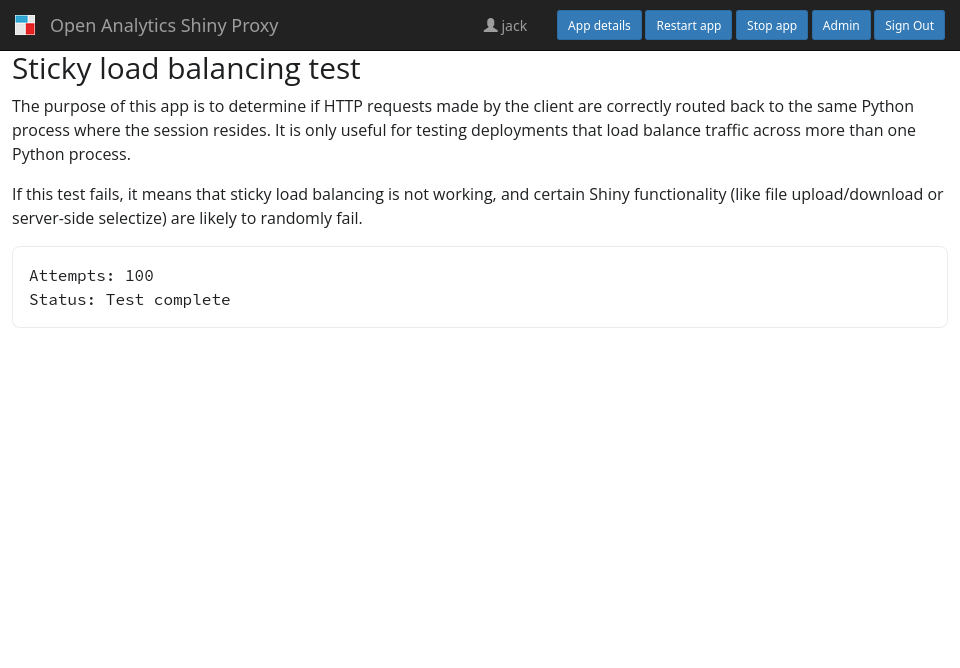
The demo launches the app via a gunicorn-wrapper in the docker RUN statement. However, the Posit docs explicitly states that you should avoid deployment configurations that do not support sticky sessions, like gunicorn (with >1 worker, not sure what the default is?).
Could someone please explain the reasoning behind the configuration used in the demo? As opposed to simply using something like : CMD ["shiny", "run", "src/app.py", "--host", "0.0.0.0", "--port", "8080"] (more or less equivalent to how R shiny apps are launched in their demo configs). Or even using uvicorn app:app --host 0.0.0.0 --port 80 as is recommended by the Posit docs?
Thanks in advance!